What exactly should the dynamic adsorption value of activated carbon be? 15%? Or 20%?
Activated carbon, an environmentally friendly material, is widely used in air and waste gas treatment, particularly in the adsorption of VOCs. Its adsorption performance directly impacts its effectiveness and replacement cycle. Recently, Sichuan Province and Dongguan, Guangdong Province, have issued technical guidelines for the use of activated carbon. However, it's worth noting that the two provinces differ significantly in the dynamic adsorption values used to calculate the replacement cycle for activated carbon. The draft Sichuan standard uses a value of 20%, while the pilot Dongguan standard uses a value of 15%.
So, what should the dynamic adsorption value be? 15% or 20%?
1. What is dynamic adsorption value?
Before discussing the value, we must first understand what the dynamic adsorption value is. The dynamic adsorption value refers to the amount of pollutants adsorbed by a unit mass of activated carbon when the gas being treated is flowing. This value is closely related to factors such as the activated carbon's pore structure, surface area, and operating environment. Simply put, the higher the dynamic adsorption value, the greater the activated carbon's adsorption capacity and the better its treatment efficiency.
Typically, the dynamic adsorption value of activated carbon is determined using specific testing methods under laboratory conditions. This value is not constant but varies depending on a variety of factors, including the actual operating environment, the type of gas being treated, temperature, humidity, and the activated carbon's performance parameters.
2. The influence of dynamic adsorption value selection on activated carbon replacement cycle
In practical applications, the replacement cycle of activated carbon depends on its adsorption performance, and the dynamic adsorption value is an important parameter for calculating the replacement cycle. According to the formula:
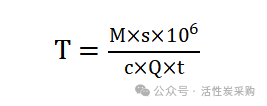
in:
Tis the replacement cycle, in days;
Mis the amount of activated carbon used, in kilograms;
Sis the dynamic adsorption capacity, expressed in percentage;
Cis the difference in VOC inlet and outlet concentrations, in mg/m³;
Qis the air volume in m³/h;
tis the running time, in h/d.
As can be seen from this formula, the value of dynamic adsorption capacity (S) directly affects the replacement cycle. A higher value (such as 20%) means that the activated carbon can adsorb more pollutants per unit mass, thus extending the replacement cycle. Conversely, a lower value (such as 15%) means that the activated carbon has a weaker adsorption capacity and companies need to replace the activated carbon more frequently.
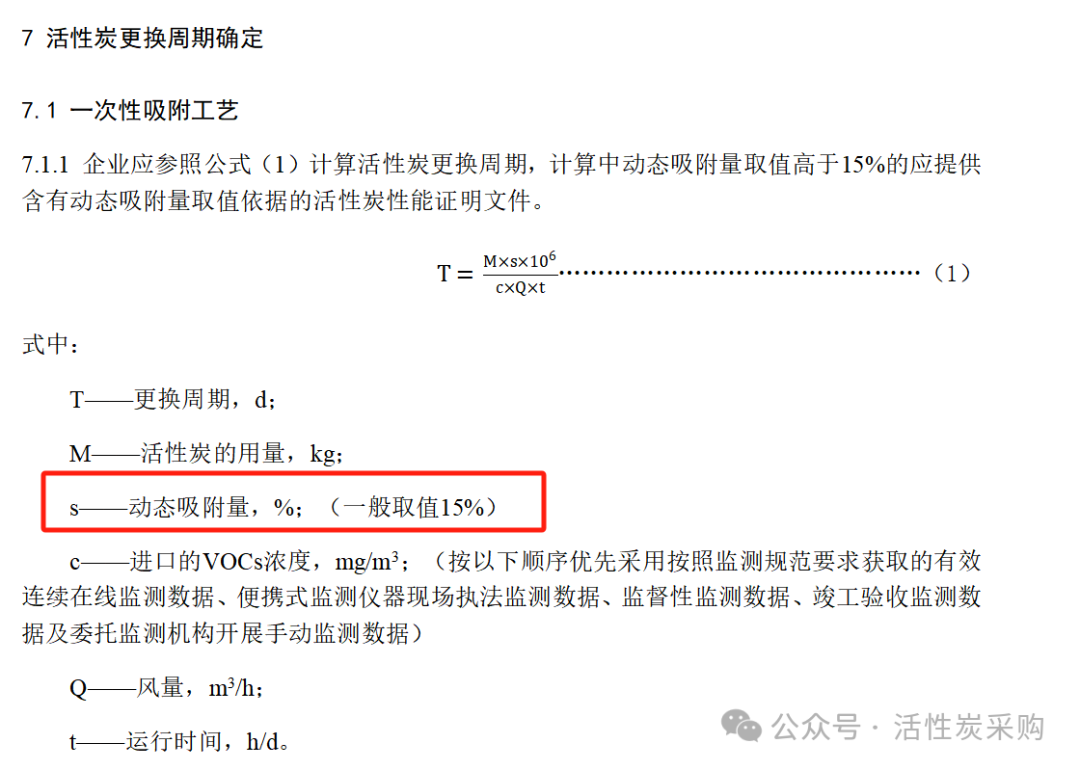
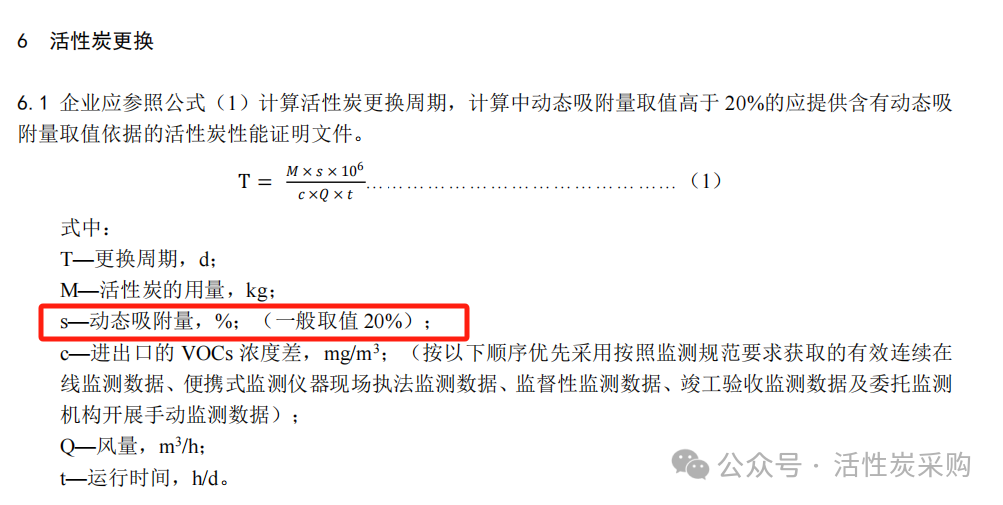
3. Why are the dynamic adsorption values in Sichuan Province and Dongguan different?
Sichuan Province's standard sets a dynamic adsorption value of 20%, while Dongguan's pilot standard uses 15%. Why is there such a significant difference between the two regions?
Regional differencesSichuan Province and Dongguan, Guangdong Province, differ in their climate, waste gas treatment needs, and industry development. For example, Sichuan Province may have considered the relatively humid climate and lower temperatures when formulating its regulations, which may make volatile organic compounds in waste gas more susceptible to adsorption. Dongguan, on the other hand, as an industrially developed region with high waste gas treatment needs and complex waste gas composition, may have adopted a more conservative adsorption value.
Enterprise adaptabilityThe dynamic adsorption value of activated carbon is not fixed but is continuously adjusted based on experimentation and practical experience. For some companies, using a lower dynamic adsorption value can ensure stable equipment operation and reduce unnecessary replacements and losses. However, some companies with high-efficiency processing needs may prefer activated carbon with a higher dynamic adsorption value to extend operating time.
Currently only a draft and trial document: Currently, the two documents are still draft documents and trial documents. The specific dynamic adsorption value of activated carbon has not yet been determined and may change later.
4. How do companies choose the appropriate dynamic adsorption value?
When choosing a dynamic adsorption value, companies should not blindly pursue high values, nor should they blindly lower standards. The following points should be considered when choosing a suitable dynamic adsorption value:
Exhaust gas composition analysisCompanies should select an appropriate dynamic adsorption value based on the composition of the waste gas they are treating. For waste gas with high VOC content and complex composition, a lower value (15%) is recommended to ensure stable adsorption of several cubic meters of activated carbon. For waste gas with a single component and low concentration, a higher value can be used.
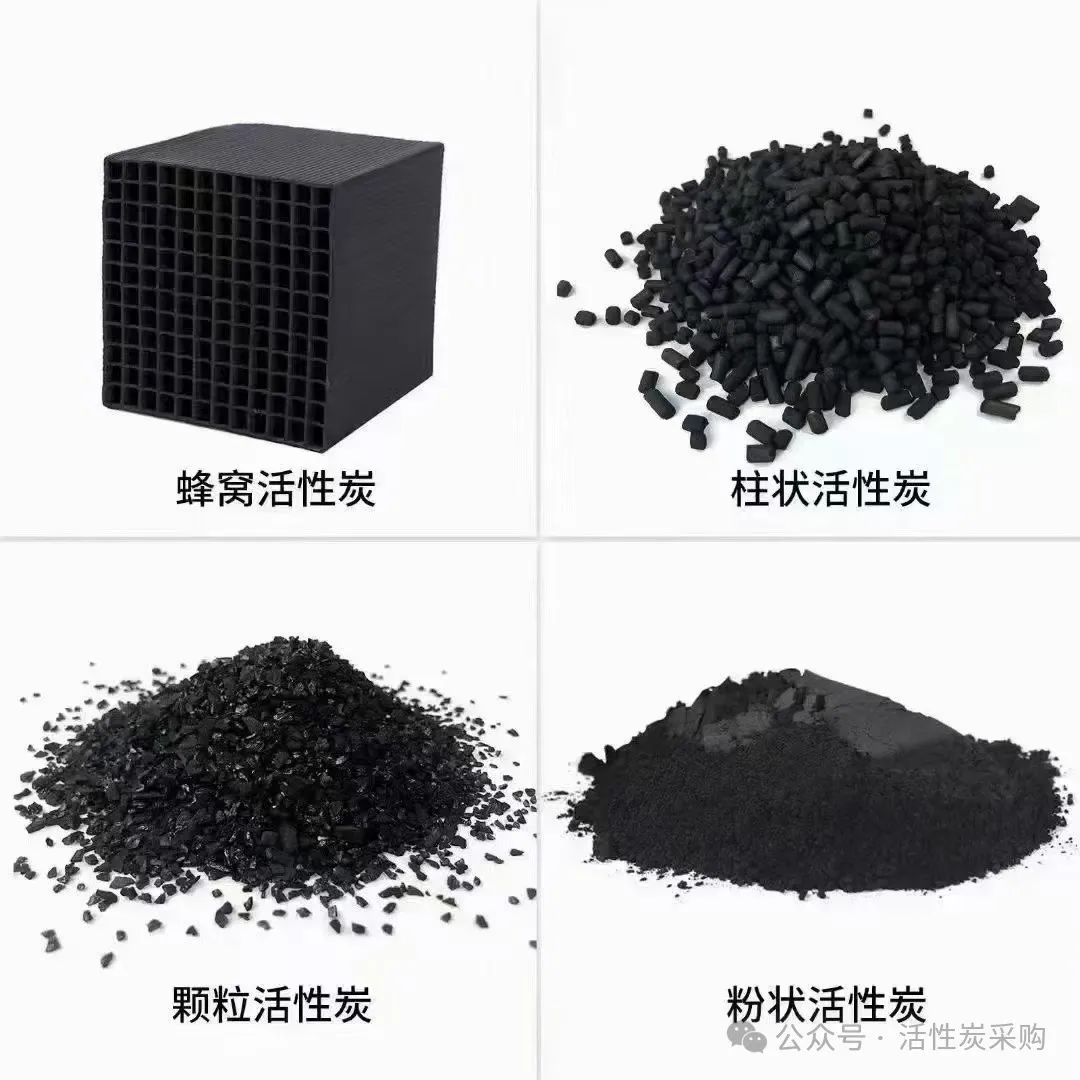
Activated carbon quality and type:Different types of activated carbon,For example, the index parameters of honeycomb activated carbon, granular carbon and activated carbon are different, and the dynamic adsorption values are different.This formula can onlyEstimateThe replacement cycle of activated carbon. When replacing activated carbon, enterprises should choose the replacement time based on actual conditions.
Monitoring and maintenanceEven after determining the dynamic adsorption value, companies still need to regularly monitor exhaust gas treatment effectiveness and check for changes in VOC concentrations. Using online monitoring equipment and manual monitoring data, they can dynamically adjust replacement cycles to ensure equipment is always in optimal condition.
5. Replacement of activated carbon
The dynamic adsorption value of activated carbon is crucial for companies to calculate replacement cycles and ensure effective waste gas treatment. The standards for activated carbon dynamic adsorption values differ between Sichuan Province and Dongguan, Guangdong Province, and have been adjusted based on local conditions. When selecting the dynamic adsorption value, companies should consider factors such as waste gas composition, activated carbon type, activated carbon parameters, and operating environment to ensure optimal activated carbon adsorption and extend the life of the equipment.